

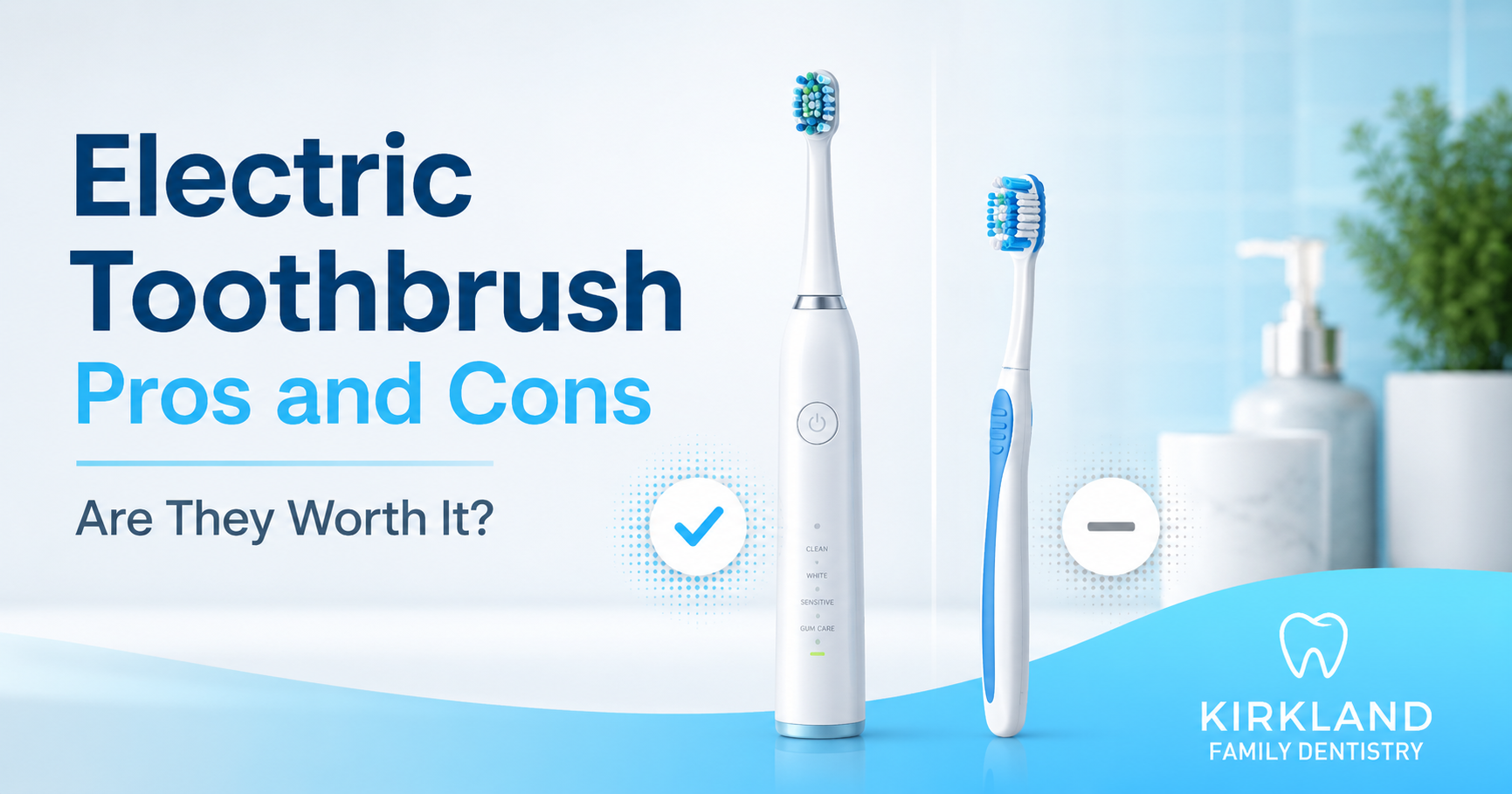
Your toothbrush is one of the most important tools for protecting your teeth and gums. Good brushing habits help remove plaque, lower your risk of cavities, and support your oral and overall health.
Poor oral hygiene can affect more than your mouth. Research has linked bad oral care to heart disease, diabetes, and respiratory conditions, so brushing well every day matters.
So, should you stick with a manual toothbrush or buy an electric one? Because Kirkland Family Dentistry uses modern dental tools every day and is one of the most technologically advanced dental practices in Kirkland, patients often ask us whether electric toothbrushes are really worth it.
For many people, yes. Electric toothbrushes can make it easier to brush for the full two minutes, clean consistently, and remove plaque with less effort. They can be especially helpful for kids, people with braces, people with limited hand mobility, and anyone who tends to brush too quickly or too hard.
They can also be helpful if you have dental work like crowns, bridges, implants, or veneers. If you’re considering cosmetic dental work, choosing the best veneers dentist is important, but daily brushing and home care still play a big role in protecting your smile.
That said, electric toothbrushes aren’t perfect. They cost more, need replacement brush heads, require charging or batteries, and still won’t work well if your brushing technique is poor.
Below, we’ll break down the pros and cons of electric toothbrushes, when they’re worth buying, and how to choose the right one for your teeth and gums.
Quick Answer: Are Electric Toothbrushes Worth It?
For most people, an electric toothbrush is worth considering if it helps them brush longer, clean more consistently, or be gentler on their gums. The best electric toothbrushes usually include a two-minute timer, soft bristles, and a pressure sensor to help prevent brushing too hard.
A manual toothbrush can still work very well if you use it correctly. The best toothbrush is the one you’ll use twice a day, for two minutes, with fluoride toothpaste and good technique.
Have questions about choosing a toothbrush or caring for your teeth? Our Kirkland dental team can help.
Request an AppointmentThe Pros of Electric Toothbrushes
Electric toothbrushes offer several benefits, especially for people who want help brushing more consistently.
- Better plaque removal
Electric toothbrushes can help remove more plaque than manual brushing when they’re used correctly. The brush movement does some of the work for you, which can make cleaning feel easier and more consistent. - Built-in brushing timers
Many electric toothbrushes include a two-minute timer. This helps because many people stop brushing too soon without realizing it. - Pressure control
Some electric toothbrushes include a pressure sensor that alerts you if you’re pressing too hard. That can help protect your gums and enamel. - Easier for people with limited mobility
Electric toothbrushes can be helpful for people with arthritis, hand pain, mobility issues, or special needs because they require less manual scrubbing, according to Poulsbo dentist, Zachary Miller. - Helpful for kids and teens
Some children find electric toothbrushes easier and more fun to use. Timers, music, apps, and smaller brush heads can help make brushing feel less like a chore. - Useful around dental work
Electric toothbrushes can also be helpful around braces, crowns, bridges, implants, and veneers, as long as you use a soft brush head and gentle pressure.
The Cons of Electric Toothbrushes
Electric toothbrushes can be helpful, but they’re not the right fit for everyone. Here are the main disadvantages to consider.
- Higher cost
Electric toothbrushes cost more than manual toothbrushes. You’ll also need to buy replacement brush heads, which adds to the long-term cost. - Replacement brush heads
Most people should replace the brush head about every three months, or sooner if the bristles start to fray. - Charging and travel
Some electric toothbrushes need to be charged regularly. If you travel often, you may need to pack a charger or spare batteries. - Possible damage if dropped
Because electric toothbrushes have electronic parts, they can be damaged if dropped or exposed to too much water. - Too much pressure
Some people press too hard, especially if their toothbrush doesn’t have a pressure sensor. Let the brush do the work instead of scrubbing aggressively. - Still requires good technique
An electric toothbrush doesn’t replace good habits. You still need to brush twice a day, use fluoride toothpaste, clean along the gumline, and floss daily.
Is it an Ideal Option for Kids?
Kids find battery-powered toothbrushes easier to use. Some even say they’re more fun to use, especially since they come in a number of shapes and sizes. Some models even play music to indicate whether it’s time to switch sides or stop. If your child is reluctant to use a traditional toothbrush, help them pick out a good electric toothbrush.
For younger kids, look for a child-size head and handle and a gentle setting. For teens with braces, an orthodontic brush head cleans around the brackets, and a pressure sensor helps keep them from brushing too hard.
The Bottom Line
Brushing the traditional way or with an electric toothbrush is a personal decision. Both your dentist and the ADA will tell you that it’s the way you brush that matters. The best, most high-tech toothbrush in the world won’t help if your brushing technique is wrong.
If you decide to pick a battery-powered toothbrush, you may be overwhelmed by the large number of available models.
If you decide to buy an electric toothbrush, look for soft bristles, a two-minute timer, a pressure sensor, comfortable brush head size, easy-to-find replacement heads, and the ADA Seal of Acceptance.
Additional Advice
Don’t forget that your gums need your attention as well. Regular brushing with a good toothbrush will keep many gum problems at bay. However, watch out for early signs of gum disease. If you want to learn more about maintaining healthy gums, check out this post about the early signs of major gum disease.
Choosing a toothbrush is a small decision. What it is doing for your gums is easier to answer in person.
Kirkland Family Dentistry, North Juanita, Kirkland WA
Call Us Now